

The Four Cosmic Seasons of the Year
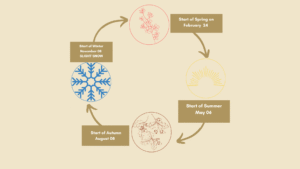
The four cosmic seasons of the year according to the ancient Chinese solar calendar do not coincide, in terms of the calendar, with the four climatic seasons prevalent in the West and, in a way, the entire world.
The four Chinese cosmic seasons start each year around February 4th (Gregorian calendar). This day is given a name with great symbolic charge in the Chinese language, lichun 立春, which means the day of the “establishment of spring,” considering that the translation of chuntian 春天 as “spring” is the most accurate.
The day of lichun 立春 also marks the beginning of one of the 12 earthly branches of traditional Chinese cosmology, the yin 寅, popularly identified with the zodiac sign of the Tiger but which in fact has nothing to do with the popular mythology of the 12 Chinese zodiac signs.
With the earthly branch yin 寅, cosmic spring begins, which includes the earthly branches, and respective months, yin 寅 (Tiger), mao 卯 (Rabbit), and chen 辰 (Dragon).
Then follows cosmic summer, starting around May 6th, and includes the earthly branches si 巳 (Snake), wu 午 (Horse), and wei 未 (Goat).
Next, cosmic autumn begins around August 8th, progressing through the earthly branches shen 申 (Monkey), you 酉 (Rooster), and xu 戌 (Dog).
Finally, cosmic winter starts around November 7th, and moves through the earthly branches of hai 亥 (Pig), zi 子 (Rat), and chou 丑 (Ox), thus completing the annual cycle of the earthly branches, in the context of the four cosmic seasons.